
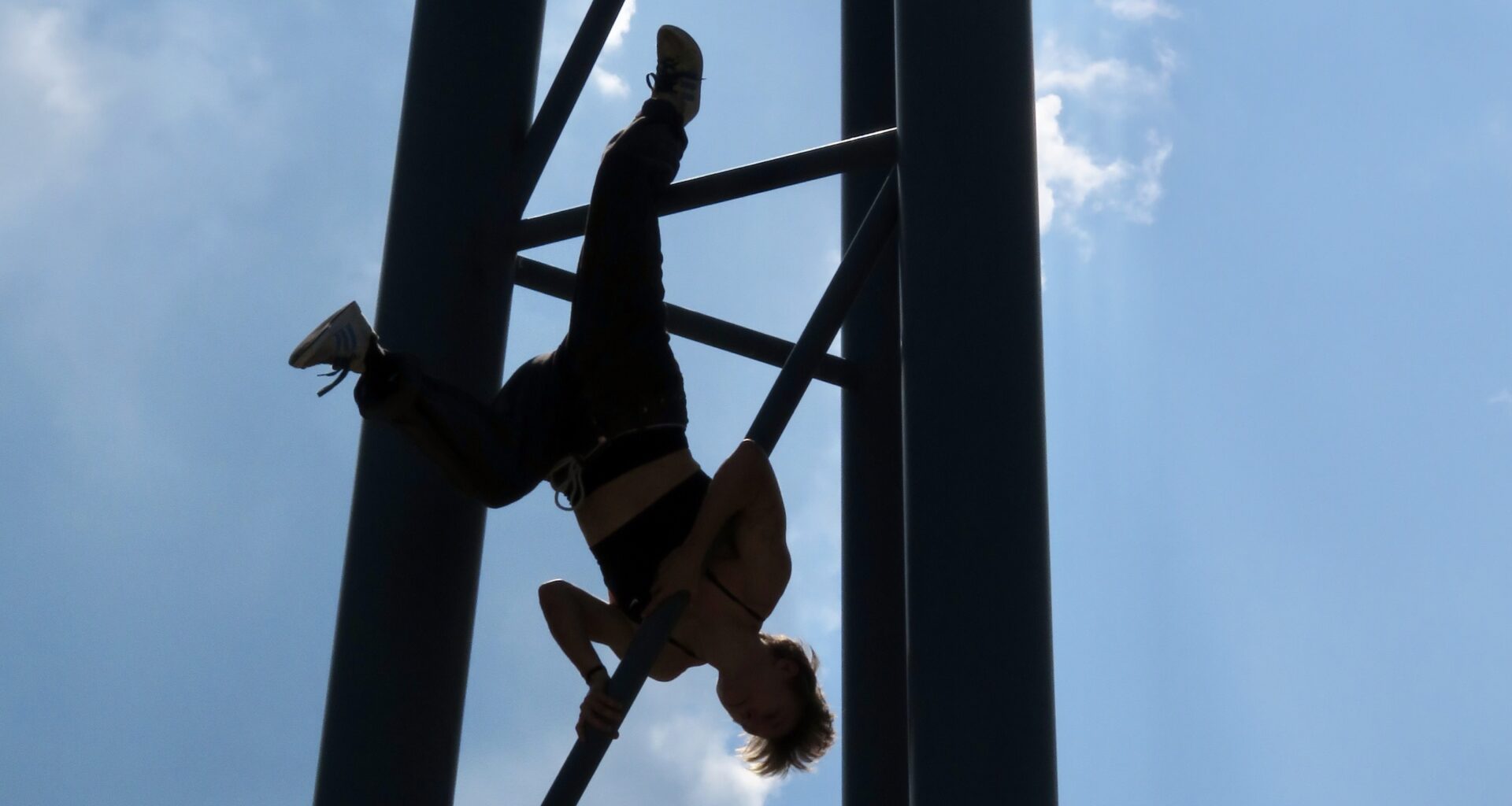
Ok, who are you all, where are you from, and how long have you been doing Parkour?
Sanni – I’m Sanni. I’m from Helsinki, Finland. I’ve been training for 16 years. Yeah, since 2009.
Iida – My name is Iida, and I’m also from Helsinki. And I started 2014, so 11 years now.
Louisa – I’m Louisa, and I’m originally from Taiwan but now living in Canada. And I’ve been training for 13, 14 years now.
So how did all of you come together to make this video?
Louisa – I went to HELJAM last year, stayed with Iida, chatted a lot, spent some time there, and really enjoyed our time together and with Sanni as well…Iida then mentioned that there’s a project that they’re working on, and they have this idea…
Iida – Yeah, because you said that you could make it, and we had already decided when we were going to film the project with Sanni and Joonas, who was the filmer and editor. Originally the project was supposed to be a three-woman project, but Kaisla who was supposed to be in it, got pregnant. So she couldn’t join and then it kinda, you know, went well that Louisa would come.

What was the inspiration behind this project and the name FRAMES?
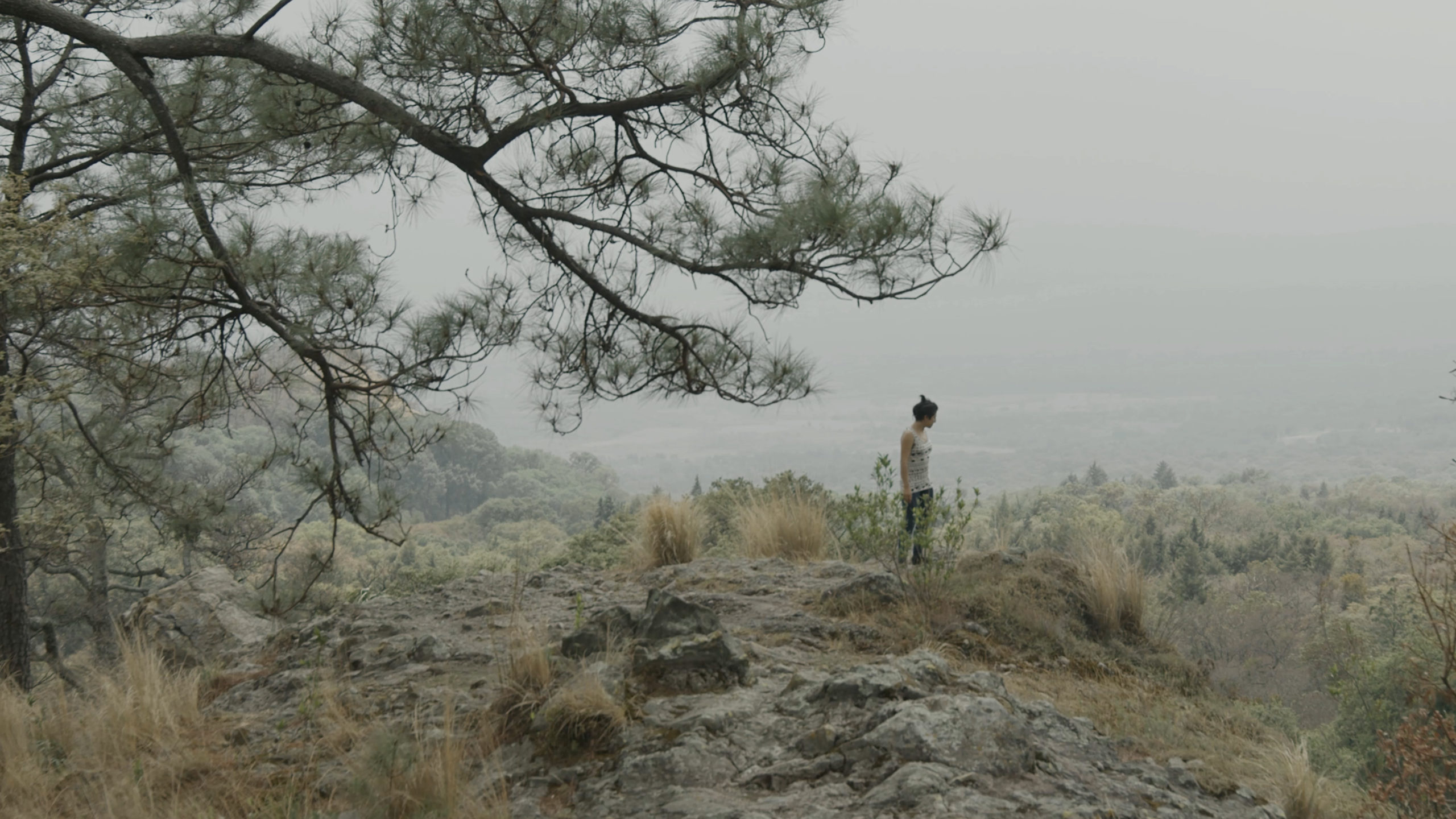
Iida – When we started to think what kind of project we want to make, we kinda decided that we wanted to take a little bit of a different angle towards it. We wanted to go spot-ahead rather than challenge-ahead when filming. We really wanted to focus on the visuality and the aesthetics…we wanted to have different kinds of architecture and, it was a very aesthetic video. That was the goal. Sanni, do you have anything to add?
Sanni – Yeah, that’s pretty much it. I think what describes the process of making this video in a nutshell, is what you said last weekend, Iida…often when you do a parkour video, you go scouting for challenges. But this time, we were just scouting for spots. We decided the spots and the shots we want, and then we just added the movement afterwards. Makes sense?

Yeah, yeah, for sure. And so it’s like photographs instead of something more dynamic like a video, in a way. You kind of were choosing…based on just a frame of a photo, in a sense.
Sanni- yeah
Iida – definitely
Where was Frames shot? Was it all Helsinki, or what?
Sanni – Uh, no
Iida – In Helsinki and then also in Tampere, which is a city in Finland.
Did you choose those places because they have the most interesting architecture, or they’re just places you’ve seen?
Sanni – It was a practical because Iida lives in Helsinki, and the guy who shot the project lives in Tampere. So we just had two weekends of filming, and it was just like, okay, once Jönkkö comes to where we are, and once we go where he is.
Iida – Yeah. And also because we wanted to do a lot of scouting beforehand, to decide nice-looking spots. It was easier to scout in Helsinki because you can do it after work. Also in Tampere, Jönkkö could do the scouting, and then I visited him for one weekend, and we scouted together. So it was easier that way.
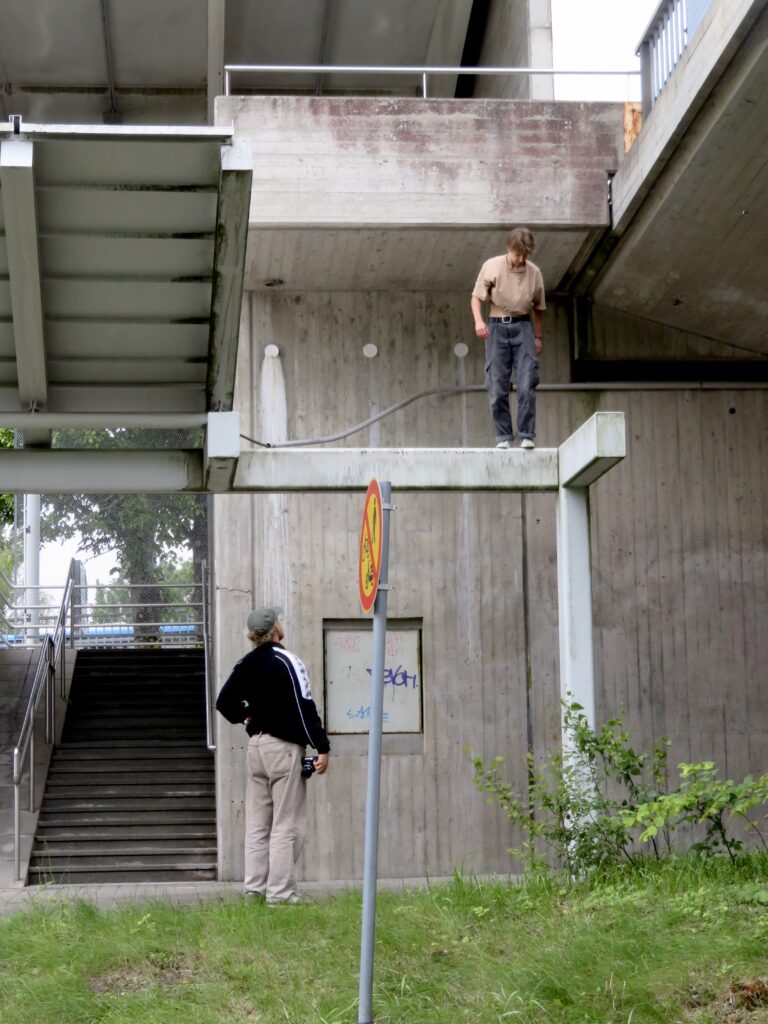
Did you all have movements in mind ahead of time? Certain movements you wanted for sure in the video, or certain spots you knew specific movements would go?
Louisa – It’s interesting because when I got into the project, I actually only went to film in Tampere with them. They shot Helsinki, I think a week before or so. The only thing I knew was Iida and Sanni had scouted stuff for me.
I asked them, like, “Oh, so what are the things you guys think that I can contribute in the project?” And then, as you can see from the film, there were a lot of descents… like, all impact stuff (laughs)
But also spent a lot of time walking around and looking at places and just trying to see if there’s anything that catches our eyes, which is really fun as well.
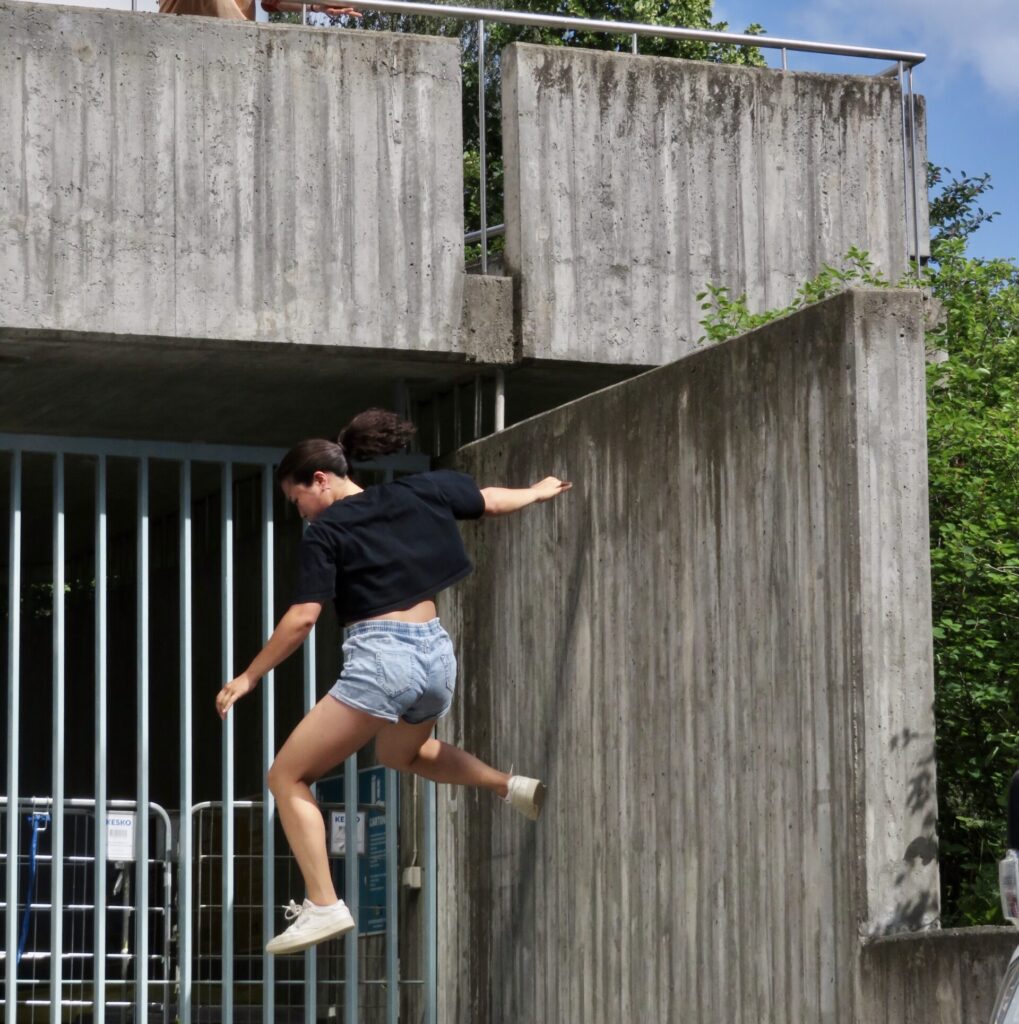
Iida it seemed like you took a little more of an artistic approach to the movement in this. Do you think that the spots forced you into that? Or that’s just how you all were training?
Iida – I have had some health problems, so I can’t take impact right now. But I have been training maybe towards a little bit dancy style for a while, because it feels a little bit more inspiring at the moment. But the reason my clips were like that in the project, was mostly because I kinda had to focus on that style. Like, I couldn’t show versatility in that sense.
Also, music is something for me. There were a few spots where I saw a some lines and then a song came to my mind and I put on my headphones, started to move, and the movements came up that way.

Sanni, how about you? I feel like you do a lot of traditional parkour in some videos. Do you think that you tried to focus more on some of your more flowy, artistic stuff in this?
Sanni – I think in general my training style is super mixed. So, I like doing very “traditional” parkour, but also more kind of flowy and creative stuff. I think with this video, Iida and I had discussed beforehand that we don’t want this video to be confined to a specific movement style. So the common denominator, or theme, in this video will be the shots and the frames and the aesthetic of the environment. Then, any style of movement will fit in the video, because that’s like, not the main character of the video.
Also, in Tampere, on the very first day, I kind of…I injured my ankle. I got a pretty bad ankle thing, which kind of then ruled out a lot of things that I could do in Tampere.
I went with a very different mindset, because I didn’t go with a mindset of, like, “Oh I need to do my best parkour” or my biggest challenges, and I didn’t wanna spend a long time prepping for the individual challenges. So I just went, okay, what comes naturally at this spot? And it just became whatever it became. But there wasn’t really, like, a clear idea beforehand that this is the style of movement that we are looking for.

Who filmed and do you know what kind of cameras/lenses they used?
Sanni – Joonas filmed, um, Joonas Purastie. We call him Jönkkö. He’s not on social media at all, so you can’t probably find him. He has a YouTube channel. He’s a very OG parkour guy from Finland, who, I think, makes very aesthetic parkour videos. Iida, is there… I don’t know about the camera.
But he had a very good vision for the project, with the editing and everything.
Iida – Yeah. Yeah, basically when we pitched him the idea, he was instantly like, “I’m in.” This was something that he also wanted to do, so it was a good match.(laughs)
Louisa – I just found the information for the camera. It’s Canon FD, and then with three different lenses… 35 millimeter, 50 and 100.
Cool. And so he did all the editing as well?
Sanni and Iida – yeah, yeah
I really enjoyed how the music and movement slowly pick up pace, and then they settle back down. Is that something that was planned, or is that something that came out in the editing process?
Iida – I was with Jönkkö when he had the first version, and then he showed it to me. The sections kinda came with the editing. Then there were some little tweaks that he did. But when I saw the first version, I was like, “Yeah, that’s the… The rhythm, rhythm must be that.” Like, “Do not change the rhythm.” So it came with the editing, yeah, because we didn’t really know what kind of movement there would be when we filmed.
Sanni- He planned for ages, didn’t he? He had this song… it was like he had it for ages already when we were shooting in Helsinki.
Iida – Yeah, yeah. He had the song, or actually two songs. In May, when we were scouting in Tampere, he already had the songs in mind. Then we were taking test shots, trying to fit them with the songs already.

You said it was framed to show off the architecture more than the movement. Could you speak a little more about that? Why did you do that, or why did you want to show off the architecture over movement?
Iida – I think the idea that I had behind it was wanting to do it the opposite way, because we usually focus on the athletes and the challenges, and then we sometimes forget to respect the environment that actually gives us the opportunities to do things.
Sanni – Yeah, I agree. I think it was partially just an artistic choice when we wanted to do something very aesthetic and visually pleasing. But I also think we had a little bit of this feeling that we wanted to do something that doesn’t… I don’t know how to put this…
Iida – It’s like one big value with parkour. Also, with me, I don’t want to put any kind of movement or style above anything. Any kind of movement is valuable in a way. So when the perspective was the spot, it allowed a release of the pressure to fit in a certain box of movement to film a parkour video. That was also nice.
Sanni – That’s exactly what I was kind of going for. Thank you for reading my mind on that.
Yeah, to get out of this expectation of what type of movement you need to put in a parkour video for it to be somehow cool or whatever. Rather, just focus on something else and take off the pressure of making such videos. I always find them very draining in a way that, because I constantly have these high expectations for myself, both coming from myself and a little from the outside… of like, okay, what kind of video do people want me to make?
With this project, it was so different because we’re just like, “Okay, we have the shot. The shot is great. Even if nothing happens in the shot, it’s still going to be a great shot. So do whatever you want, it doesn’t matter. However, mundane or small or simple it is, what you do doesn’t really matter. It’s a great shot anyway.” And that took so much pressure away from me. This was easily the most enjoyable video project for me to do as an athlete.
Louisa – I would say it’s showcasing how a lot of people think about parkour as well… like a different perspective on their surroundings, even if it’s something that is so insignificant, like a railing next to stairs. For some people, they see something, they have parkour vision, and they can, in a way, paint a picture with movement in that area.
That’s something I feel is very valuable in parkour, and sometimes it’s nice to go back to that… like, remind yourself that it’s not only about certain types of movement. It doesn’t have to be just doing challenges. There’s so many things that we can play with, see, and enjoy around us.

I feel like the lighting was really intentional in the video, and you only shot in spots with good lighting. Can you talk about that?
Iida – Actually, the lightning was a bit difficult because of summer being sunny all the time. But Jönkkö was very, um… He always said to us, if we saw a spot, like, “This is really cool,” but if the lighting wasn’t okay, then he said, “No, we are not going to film. Not at this time or at this spot.” The shots where Louisa does the drop, we actually had to go there twice to get the right angle and the right lighting.
How long did it take to shoot? Or to make? The shooting and the editing together.
Sanni – Six days. So three days in Helsinki and three days in Tampere. And Jönkkö did the edit so quickly. It’s been done since, like, August.
Iida – Yeah, yeah. It was like the 11th of August when he had the first version, and then, couple of days after that it was the final version.
Sanni – And it was like in July that we shot in Tampere, right?
Iida – Yeah, yeah, yeah.
So it was, like, one month. And he said, also, that with editing, that the first and the last parts came very quickly, like in a week, and then he had to take a pause to think and just let it go for a moment, and then go back to it.
Sanni – But then Iida and Jönkkö, but especially Iida, also spent a lot of time scouting beforehand.
Iida – That was also something I would mention about this project. If we hadn’t those lists in our notes, then the filming days wouldn’t have been that smooth. I made a list (laughs) like certain different kind of architecture. Then, with Sanni, we went two days before we started filming in Helsinki, and we basically just went to see different spots that I had scouted beforehand, and then we kinda chose the areas to film.
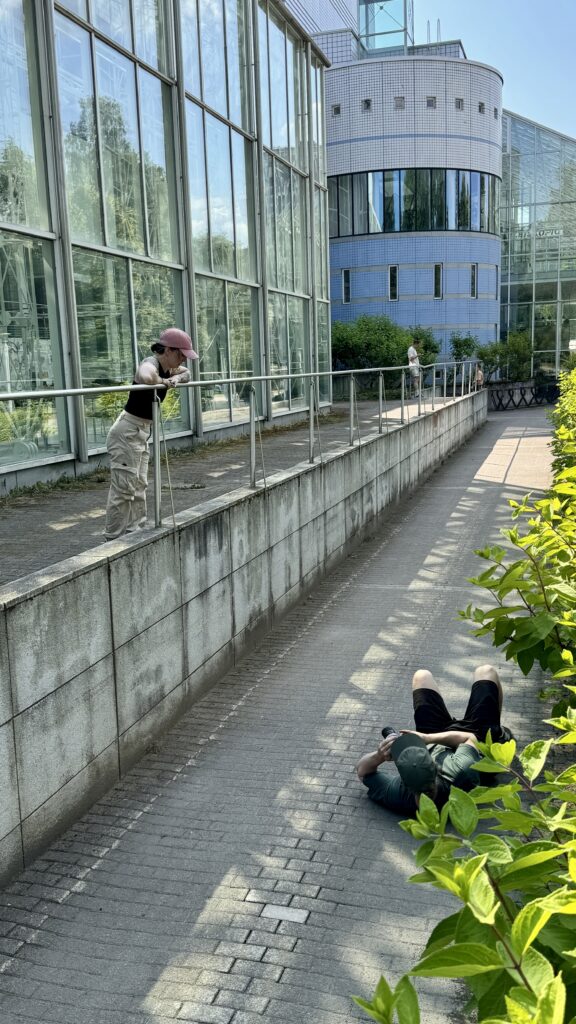
Over how much time did you scout spots?
Iida – Well (laughs) I don’t know. I was sick a lot (laughs) in spring, so I spent a lot of time scrolling satellite pictures and that kind of stuff. Then I also asked a lot of our friends like, “Yeah, tell me your top three aesthetic spots in Helsinki.” (laughs) Then I went to see them… yeah I can’t say, but it was hours and hours
Was there a favorite meal to eat together after a session?
Louisa – When you ask this, the only thing that popped into my mind is the lunch that we had at the school. It was like the student meal. It’s interesting because in Helsinki, or in Finland, lunch is a very, uh… like, they serve it very differently. You have a lot of buffets… like, it’s very buffet-style everywhere, and I was introduced to it properly because every time we’d have a really big lunch, pretty much (laughs). You have vegetarian, you have meat, and, you know, we would get together and then sit down and talk about our film or the plan for the day…
Sanni – I think this was after we had shot the project, but we had a really nice dinner at the summer cottage… like, that one night we just grilled something…
Louisa – Oh, the peas were really good.. the, the peas. They introduced me to the summer peas that you get at all the markets, and they’re all very fresh and huge. You can get them in little containers and just eat it like that.
Iida – I also remember the lunches, and the summer cottage thing was very nice after we had, like, filmed everything. We went to the summer cottage to eat and sauna and swim in the sea. So, it was, yeah, I think it was a good ending (laughs) for the… filming days.
Louisa – Swimming in the sea, the ocean, and the lakes is amazing at the end of the day. We pretty much did it every day… out shooting, and then having food, then shoot a bit more, and at the end of the day, we’d go for a swim.
What are you all excited about, or for, in parkour?
Louisa – Parkour has grown so much and I’m excited to see how people continuously push parkour in different directions. Whether it’s our physical limitations, styles, or culture. Things like media, art, merch, and events.
Iida – Hmm. Well, I think in a way you can always do something with it and play with movement in any situation. My perspective on doing parkour has changed a lot since I’ve had some health issues, so it has changed my way of thinking about training. I think parkour is one of those disciplines that you can almost always do something.

Sanni, how about you? Anything exciting or you’re excited about in parkour right now?
Sanni – I think the past few years I’ve really worked towards, like, developing a little bit more flexible mindset toward my own training. I’m excited to see that, uh, bear fruit… yeah, to go back to the mindset for training I had when I was way younger: a lot of joy and excitement, and less internal pressure and less internal expectations for myself.
I feel like I’m kind of slowly getting there. And yeah, I’m really excited about that because I think it’s hopefully going to free a lot of my head space to focus on what’s actually meaningful for me in this sport. Also, I was actually just talking about this with Simone: the past few years, it’s been super fun to make these kind of video projects because I feel like… I used to do circus quite a lot, and I studied circus and I did some circus work. Then, after the pandemic, that all kind of died.
And I don’t miss much about circus school or circus work, but what I do miss is kind of a creative outlet and this process of creating things in a group of people and making something tangible that you’ve created with other people. I feel like video projects in parkour help me… like, I can feel that same gap for this creative outlet and for doing and creating something in a group.
And that’s super cool and it’s been super fun to do that during the past few years.

Uh, on the opposite side of this, do you have any parkour hot takes?
Sanni – I have so many. I don’t know what I can say here.
Iida – Yeah. Yeah.
You can say it all, and we’ll cut out the worst (laughs). I just did an interview recently, and their hot take was that they hate those… I don’t know what you call it… the way people do a croc off a ledge in competition. So it’s it’s really just whatever you feel. It doesn’t have to be, like, you hate a move.
Louisa – I feel like splats are an incomplete thought…
Iida – Well, my hot take is that I think people shouldn’t send that much (laughs). I think the sending culture is a little over the top right now, and we should really, like, go back an inch with it. I don’t want to see as many head injuries or close calls as we’ve seen this year.
Sanni – REDACTED
Yeah, yeah, I see that. When we’re younger, our brains are still developing, and those injuries have a much larger impact.
How about a book recommendation? Do you have any books you recommend?
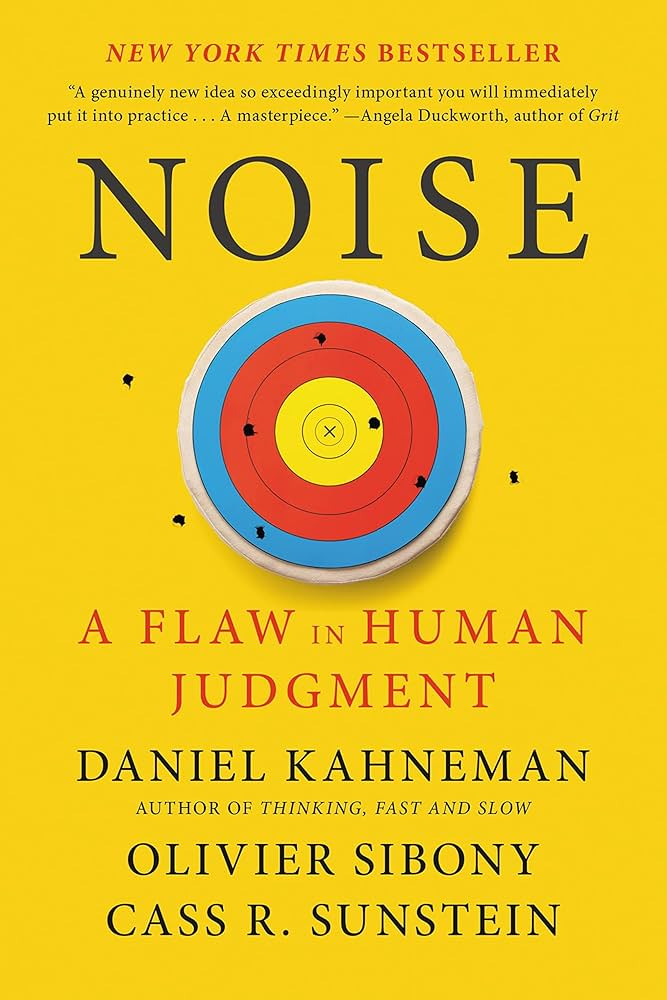
Sanni – I really like the book Noise, by Daniel Kahneman, Olivier Sibony, and Cass Sunstein. That was really good. I think that it’s a little… without background of stats, it might be a heavy read, but with a little bit stats background, it was very good. I really enjoyed it. I think I was actually reading it when we were shooting this project, so I think it’s very topical here.
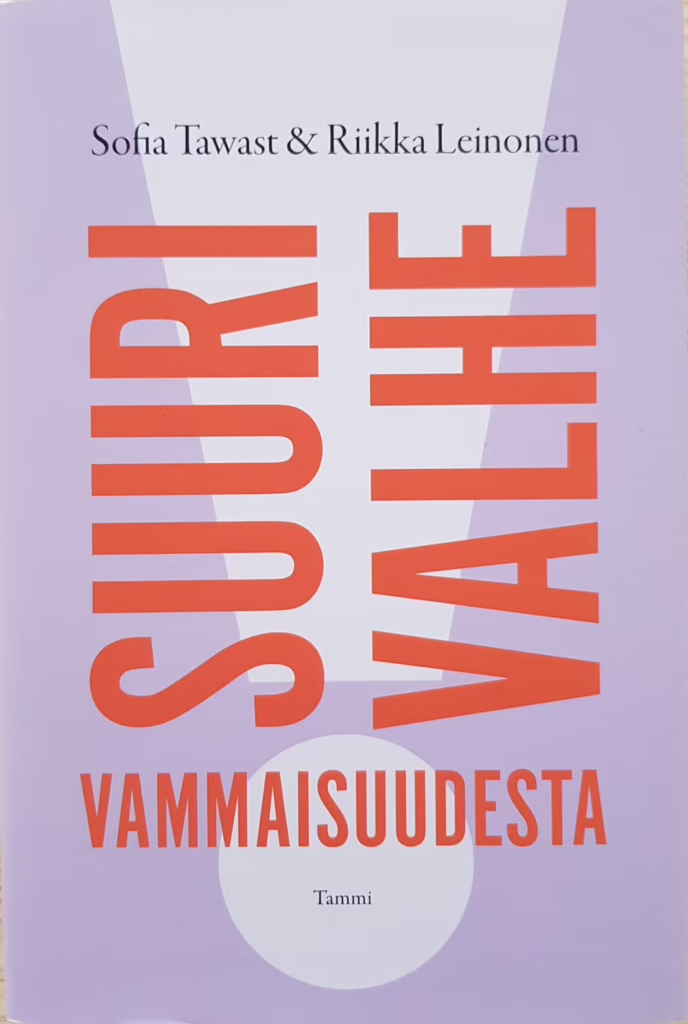
Iida – I would recommend… it’s only in Finnish. Non-fiction book, basically about ableism. These two Finnish persons wrote it, and then they won the Finlandia Prize last year, which is the big prize for books in Finland. Uh, yeah. It’s called Suuri Valhe Vammaisuudesta, so it’s like “A Big Lie About Disabilities” or something like that.
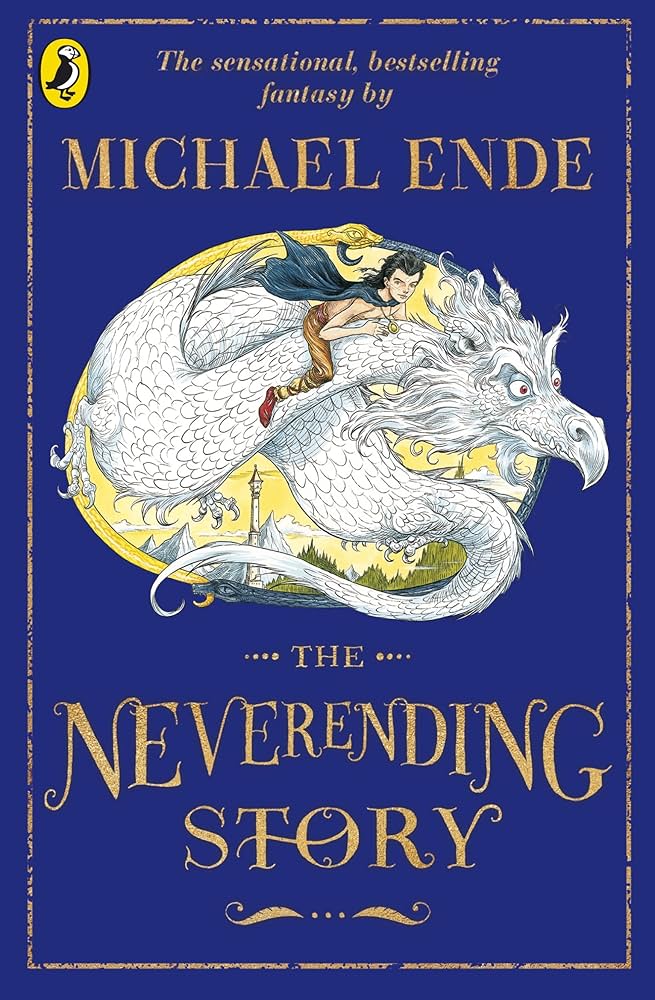
Louisa – It’s hard to pick out just one book. But one I enjoyed a lot growing up is The NeverEnding Story by Michael Ende. It was given to me as a birthday gift and I use to reread it once a year. It’s quite an odd and whimsical yet philosophical fantasy story.
What are you listening to right now? Could be music, podcasts, or…
Iida – Well, I listen to music albums because I think with albums, they’re usually an artistic choice, like how you make it work as a whole. So I’ve been listening a lot of albums from the first song to the last song (laughs), and my favorite at the moment is a Finnish artist called Vesta.
Uh, yeah, her first or second album called Lohtulauseita. So that’s my favorite at the moment. I listen it on repeat (laughs).
Sanni – I’m coming across as such a fucking nerd, uh, now, in this part of interview. I’m always listening to my favorite neuropsychology podcast called, Navigating Neuropsychology. It’s really fucking good.
Louisa – I often explore random experimental and instrumental music, and Bag of Bones is one I stumbled on a few years ago that has been my go-to ever since. It’s great for getting my brain and body going and more focused with its rhythms and beats.
This is a good time to ask, what do you all do for a living? Or what is your main occupation of time these days?
Iida – I’ve studied to be a community educator which is a bachelor’s degree, and I work in a parkour academy at the moment. I’m the coordinator: I coach classes, and I coordinate this youth-work kind of thing. And then I also coach climbing, but that’s only two classes a week.
Sanni – I’m a full-time student, doing a master’s in psychology, and I do a little bit of parkour work on the side. I teach, like, one adult class and also do workshops at events.
What’s your favorite trick or movement, if it has a name?
Sanni – I love rolls.
Iida – Uh, I, I don’t love rolls. I don’t love rail rolls. But I think my favorite movements don’t have names. I love all these random… Well, the one that was actually in my latest post, the clip in Tampere when… where you’re in your… I don’t even know what this is called… Yeah, the back of my knee. Something like, uh, doing some sort of movements with the back of my knees (laughs).

What are your hobbies outside of parkour?
Iida – I take dance classes once a week, and then sometimes I climb. I also write poems and (laughs), I love taking, like, nature photographs. I’m not very good at it, and I don’t have a good camera, but I still love it (laughs).
Sanni – I just like reading and nerding out on, yeah, neuropsychology and neuroscience and that stuff. And then I do a lot of jigsaw puzzles.
Iida – Oh, and I knit. I knit a lot. I almost forgot. We also do it together with Sanni: she does puzzles, and I knit. Then we eat porridge in the evening (laughs).
Louisa – I often feel like I don’t have enough time for all my hobbies. I love doing other sports outside of parkour, like climbing, biking, and dodgeball. I also spend a lot of time working on art and animation projects, or just anything I can make or build with my hands.
Last question. Is there anything else that you’d like to say or promote or shout out?
Sanni – No, just shout out to Jönkkö for the frames. Like for filming and editing and putting so much effort and everything into it.
Iida – Well, I don’t know. Some of our friends also helped, and your partner, Viljam, helped.
Sanni – Okay. Yeah, shout out to Viljam.
Louisa – Definitely a shoutout to Joonas and Viljam for all their help to make FRAMES possible!
Thank you all so much for, for doing this. I really enjoyed your video and I really enjoyed this interview. You all have some really good energy, I appreciate it.
Iida – Yeah, thanks.
Sanni – Thanks for having interest in the project. We are super hyped people have been like so supportive.


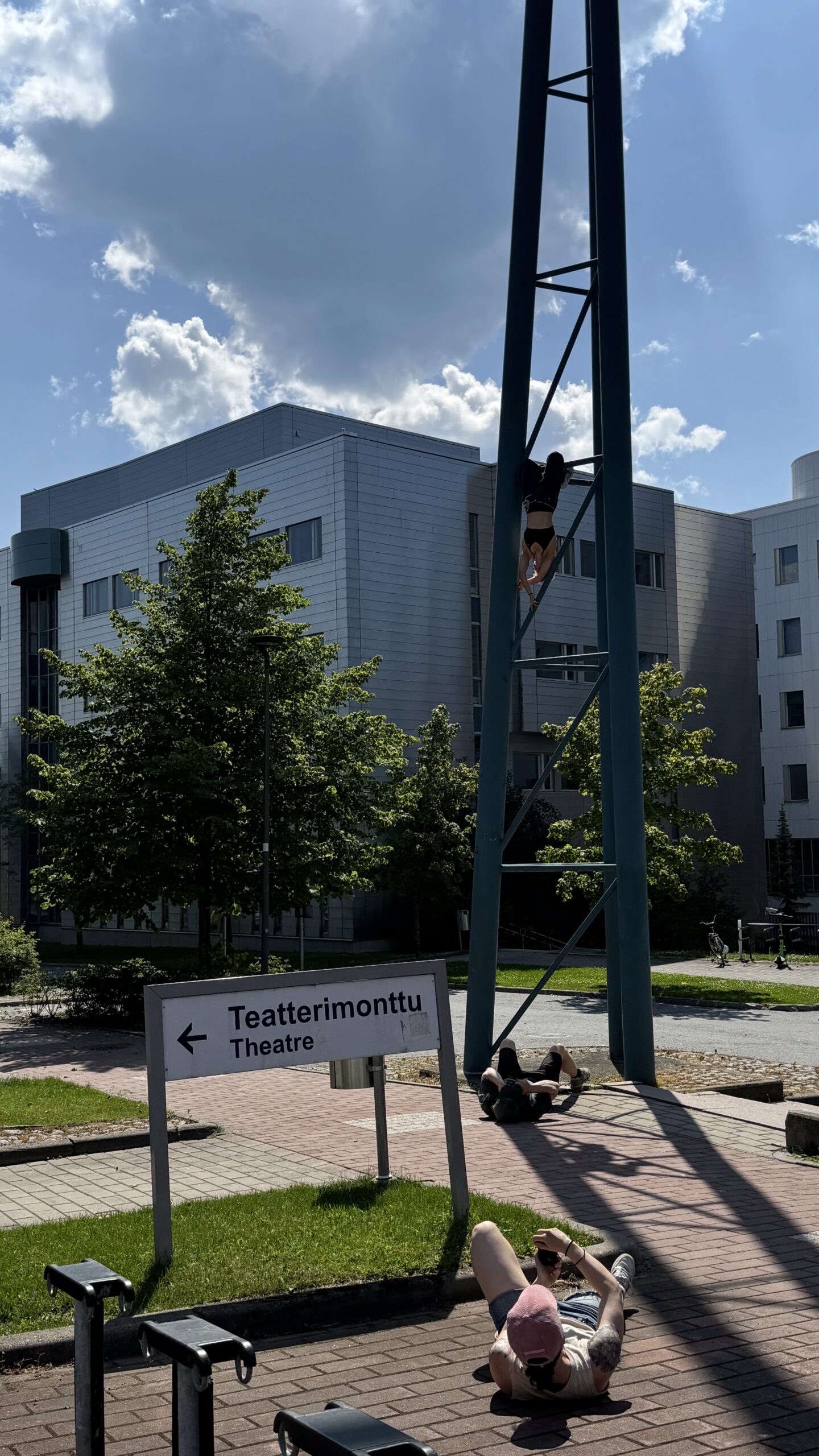


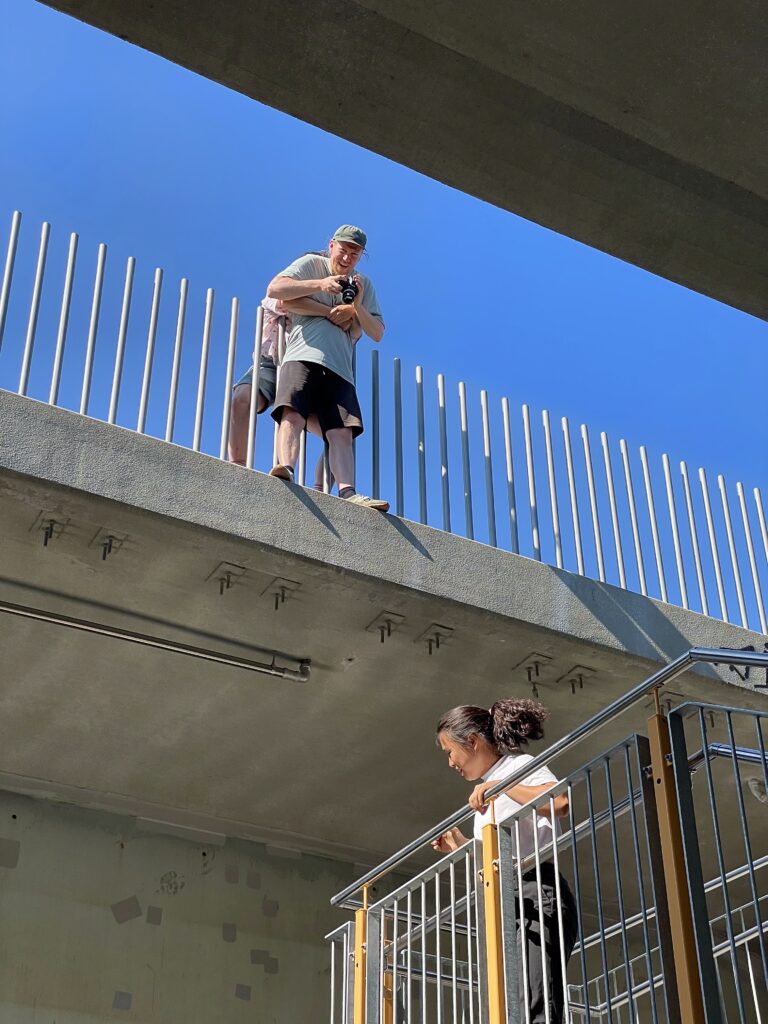
Photos and video: Iida Laiho & Joonas Purastie.
Follow Sanni Vesterinen, Iida Laiho, and Louisa Chang for more.
Want more? Subscribe to help us create more stories like this one and to make sure that we’re able to continue creating the content you love.